
Dog Health Guide to Prevent Leg and Lower Back Weakness: Exercise Habits and Daily Care
 Dog Health Guide to Prevent Leg and Lower Back Weakness: Exercise Habits and Daily Care
Introduction
A dog's leg and lower back health is an important factor that determines their "walkable time".
In this column, from a veterinarian's perspective, we comprehensively explain everything from exercise, living environment, nutrition, to medical care to prevent the deterioration of legs and lower back.

Table of Contents
 Table of Contents
Why do a dog's legs and lower back weaken first?
It is said that a dog's health often begins to decline from the "legs and lower back".
Some owners may have noticed changes, such as their dog running around energetically when young, but recently taking longer to stand up or increasingly sitting down during walks.
Just like humans, as dogs age, their muscle mass gradually decreases and their joint movement becomes stiffer.
In particular, dogs support about 60% of their body weight with their front legs when stationary, but their hind legs are responsible for the "propulsion" when walking or running.
Therefore, decreased muscle strength and joint decline tend to appear first in the hind legs. In addition to aging, lack of exercise, obesity, and living environments such as slippery flooring can also cause strain on the legs and lower back.
If left untreated, this can lead to arthritis, unstable walking, and falls, but it is fully possible to slow down the progression through daily exercise habits and environmental improvements.
In this column, we will explain in an easy-to-understand manner from a veterinarian's perspective the causes and signs of weakening legs and lower back in dogs, as well as daily walks and indoor care tips.
First, let's take a look together by understanding why "weakening legs and lower back" happens.
Causes of Weakening Legs and Lower Back and Signs to Watch For
Muscle Atrophy and Joint Degeneration
The cause of a dog's weakening legs and lower back is not simply "because they got old".
In addition to physical changes such as muscle decline and joint wear, lifestyle habits and environment are also greatly involved.
First is representative decrease in muscle mass (sarcopenia).
As they age, the metabolism to maintain muscle drops and the amount of exercise decreases, so the muscles in the hind legs gradually become thinner. Especially when the muscle strength of the quadriceps and hamstrings drops, the actions of standing up and starting to walk become slower, and they become unable to walk long distances.
Next is important joint degeneration.
The wearing away of joint cartilage and chronic inflammation cause pain and stiffness, making them reluctant to move. This is the so-called "osteoarthritis (OA)", which is one of the most common musculoskeletal disorders in middle-aged and older dogs.
Lifestyle Factors such as Obesity, Lack of Exercise, and Slippery Floors
Also, obesity is a major factor that increases the burden on the legs and lower back.
Just a 1 kg increase in body weight can multiply the load on joints and ligaments several times.
A lack of exercise, excessive treats, and calorie-dense food threaten the health of their legs and lower back before you know it.
Furthermore, home environments such as slippery flooring and high steps cannot be overlooked. Every time they slip, small stress is applied to the joints and ligaments, which can lead to damage and dislocations in the long run.
The Importance of Early Care Without Dismissing It as "Age"
The decline in a dog's legs and lower back is caused by a combination of four factors: "muscle", "joints", "weight", and "environment", not just aging. Even in dogs that look energetic at first glance, small daily changes can be the "first sign".
Guidelines for Exercise Volume and Care by Age and Breed
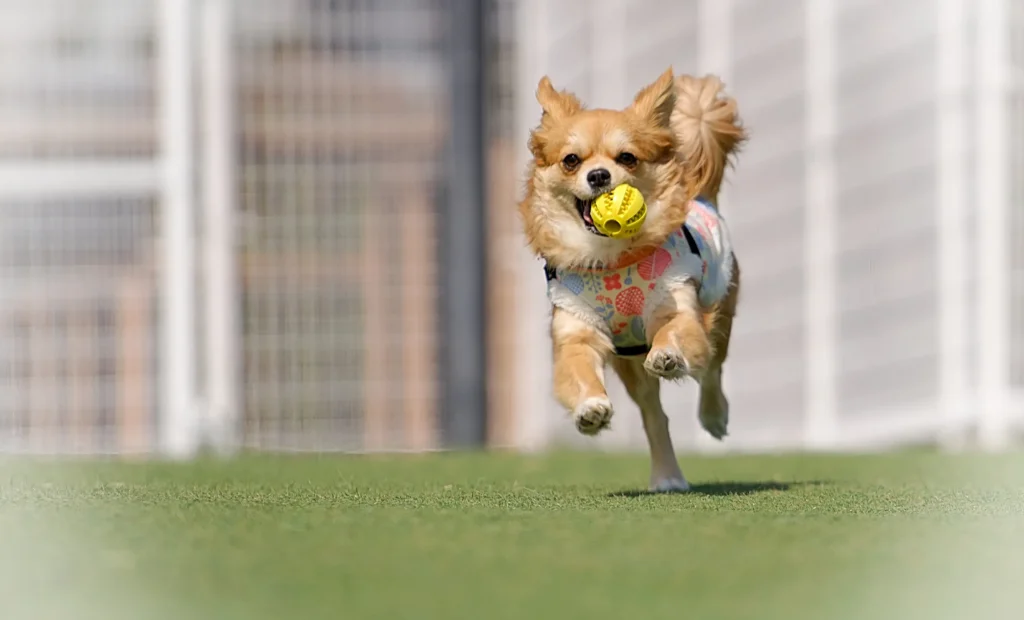
For dogs, daily exercise is like "nutrition" to maintain the health of their legs and lower back. However, the amount and content vary greatly depending on age, physique, and breed.
Simply saying "they are young, so let them exercise a lot" or "they are old, so let them rest" can actually hurt their joints and muscles.
Exercise Intensity and Walk Duration for Young to Adult Dogs (30-60 minutes x 2 times)
Young to Adult Stage (approximately 1 to 6 years old)
During this period, muscle mass and joint flexibility are at their highest, making it most suitable for exercise. The guideline is about 30 minutes to 1 hour of walking twice a day. Incorporating brisk walking and gentle slopes is effective in maintaining endurance and lower limb muscle strength.
However, long-distance running on asphalt and play that involves sudden repeated changes in direction can cause damage to the ligaments in the knees and shoulders. "Continuing moderate intensity every day" is most important of all.
Low-Load, High-Frequency Exercise for Seniors (10-20 minutes x 2-3 times)
Senior Stage (approximately 7 years and older)
As they age, the regenerative capacity of joint cartilage and muscles decreases, making it easier for fatigue to remain after exercise. Therefore, the key is to prioritize frequency over duration. Walking sessions can be 10 to 20 minutes each, and making them walk frequently, divided into 2 to 3 times a day, results in exercise that is gentler on the legs and lower back.
In addition, lowering the walking speed and "walking slowly" can sufficiently maintain muscle strength.
On cold or rainy days, simple muscle training indoors using treats for balance exercises or repeating "stand and sit" is also recommended.
Precautions by Dog Breed (Small, Medium, and Large Dogs)
Differences by Dog Breed
- Small breeds (Chihuahua, Toy Poodle, etc.)
→ Small joints make them prone to patellar luxation. Keep climbing steps and jumping to a minimum. - Medium breeds (Shiba Inu, Corgi, etc.)
→ Good muscle balance; walks and gentle uphill exercise are effective. Watch out for obesity. - Large breeds (Labrador, Golden Retriever, etc.)
→ Their joints bear a heavy load, so joint support is important from a young age. Low-impact exercise such as swimming is ideal.
For all dog breeds, weight management and reducing stress on the limbs are the keys to longevity.
"Not too much, not too little": The philosophy of exercise balance
Key points for owners to remember
- When it comes to exercise volume, "more is not always better"—what matters is whether it suits the individual dog
- Exercise "quality" = a balance of muscle maintenance and flexibility
- Adjust daily based on physical condition, temperature, and ground conditions
Observe walking style, posture, and susceptibility to fatigue to spot early signs of abnormalities
Exercise is essential for maintaining healthy limbs, but both "too much" and "too little" are problematic.
Tailoring an exercise routine to your dog's age and body type that can be continued daily without strain is the greatest preventative measure against future joint issues.
At-home limb training methods
To protect your dog's legs and hips, light home training in addition to daily walks is very effective.
Even without special equipment, there are several exercises you can safely perform at home.
The key is to "do it with proper form, even for a short time, and consistently."
Basic routines also used in orthopedic and neurological rehabilitation
Many of the training exercises introduced here are basic movements also utilized in postoperative rehabilitation for orthopedic and neurological surgery.
They are designed to be safely incorporated at home without using difficult, specialized equipment.
However, if your dog has an underlying condition or is in pain, do not rely on your own judgment and consult a veterinarian.
Sit-to-Stand Exercise (Dog Squats)
A simple exercise where you gently have your dog repeat "sit → stand → sit".
Aim for 5 to 10 repetitions per session, about 2 sets a day.
This helps strengthen the quadriceps and hamstrings of the hind legs, maintaining their ability to stand up.
Stop if there is pain or discomfort, and keep it within a comfortable range.
Balance Exercise (Core Training)
Have your dog stand on a yoga mat or a soft mat and gently balance while supporting their body front-to-back and side-to-side.
Maintaining this posture for just 10 to 20 seconds, 2 to 3 sets, stimulates core muscles (such as the back and abdominal muscles) and is effective in preventing falls.
Once they get used to it, adding a slight movement of lifting one paw makes it even more effective.
Towel Hurdle / Stepping Exercise
Roll up a bath towel, place it on the floor, and have your dog slowly walk over it.
By lining up 3 to 5 hurdles about 10 to 20 cm high, you can expand the range of motion in the hind joints and train their sense of balance. The key is not to make it too high and to perform it on a non-slip floor.
Step Exercise (Step Up/Down)
Using a thick cushion or low step, have your dog repeatedly place their front paws on it and lower them back down.
This maintains joint range of motion and stimulates the muscles of the front and hind legs in a well-balanced way.
Start with steps under 10 cm, and as they get used to it, gradually increase the duration and number of repetitions.
Post-exercise massage and stretching
Massage and Stretching
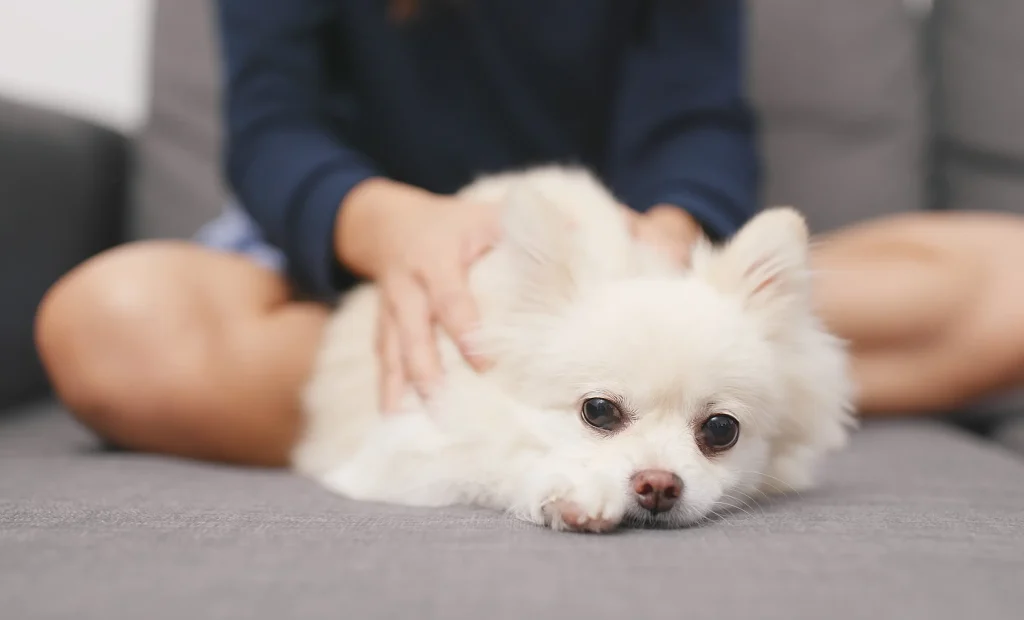
After exercising, incorporate massages by gently stroking the thighs and lower back.
This improves blood flow to the muscles and helps prevent fatigue and stiffness.
Additionally, gently supporting and slowly stretching the knees and hip joints is effective. The goal is to create a relaxing time within a pain-free range.
Tips for safe execution
- Perform on non-slip flooring (yoga mats or carpets recommended)
- Do not force it; stop if they show signs of fatigue
- Do not perform on days when there is pain, limping, or shivering
- The owner must always supervise during training
"Safe, short, and fun" is the secret to consistency
Light exercise at home acts as a "switch to activate muscles and nerves" for your dog.
Even if it's just a few minutes a day, continuing it daily will steadily improve the stability of their legs and hips.
Even without special gear, keeping "safe, short, and fun" in mind is the secret to keeping it going.
Creating an environment in daily life to reduce stress on the limbs
When it comes to protecting your dog's legs and hips, creating a proper living environment is just as important as exercise.
Even if you work hard on daily walks and training, if the floors at home are slippery or have too many steps, all your efforts can go to waste.
Especially for senior dogs or those with joint concerns, reviewing the living environment is the ultimate preventative measure.
Preventing slips on hardwood floors
Countermeasures for slippery floors
Hardwood and slick floors are much more dangerous to dogs than you might imagine.
Every time they slip, excessive strain is placed on their joints and ligaments, increasing the risk of patellar luxation or cruciate ligament tears.
Especially for senior dogs whose hind leg muscle strength is declining, a single fall can lead to chronic pain.
The following methods are effective as countermeasures:
- Lay down non-slip mats or interlocking carpets to secure walking routes
- Trim nails regularly and keep the fur on the paw pads short (effective for preventing slips)
- Choose non-slip types for floor wax and cleaning sheets
- Place rugs in strategic areas to create "dog-only walking zones"
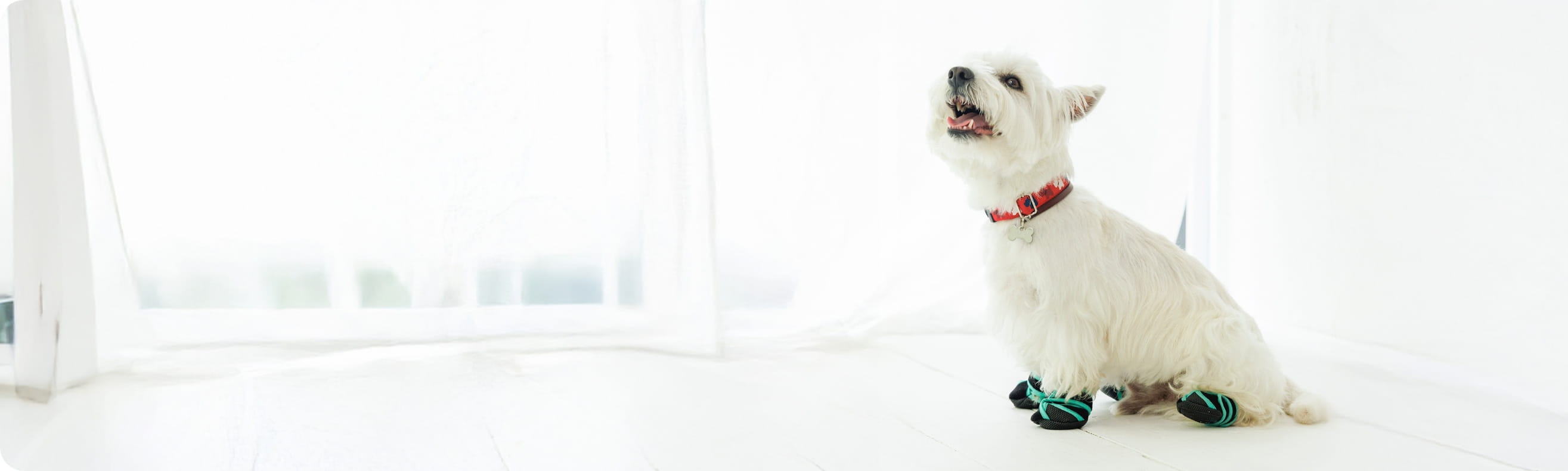
Additionally, non-slip shoes and socks for dogs are now a viable option.
They feature non-slip processing on the paw pads, making it easier to prevent falls and impact on the joints.
They can also be used as temporary support, especially for dogs recovering from surgery, those with neurological conditions, or seniors who have difficulty balancing.
However, if the size does not fit, it can paradoxically make walking unstable, so
it is important to get them used to it for short periods and prioritize breathability and fit.
Long-term wear can cause moisture buildup and skin issues, so be sure to take breaks.
Installing ramps to support stepping up and down
Going up and down sofas, beds, and stairs puts heavy stress on the legs and hips.
Small dogs, in particular, often injure their knees and lower backs by jumping down from heights greater than their own body height.
Recommended tips:
- Install ramps or steps to support going up and down
- Place cushions next to sofas and under beds to avoid jumping
- Keep going up and down stairs to an absolute minimum and carry them when moving whenever possible
These adjustments alone can significantly reduce joint strain in daily life.
Choosing beds and resting spaces
Posture during resting and sleeping also affects stress on the legs and hips.
Floors that are too hard or bedding with steps can place pressure on the joints, while beds that are too soft make it difficult to maintain a stable posture.
Ideally, you want bedding that combines moderate cushioning with memory foam properties.
For senior dogs, choosing a bed with a height that makes it easy to stand up from and low edges provides peace of mind.
Keeping the sleeping area warm is also effective in preventing stiffness in joints and muscles.
Reviewing indoor layout and daily traffic flow
Check whether there are slippery spots or steps along the paths your dog walks every day.
Simply laying mats in frequently used areas can help improve walking posture and balance.
Additionally, placing the toilet and water bowl close to the bed reduces the strain of movement and lowers the risk of falls.
To protect the health of your dog's legs and hips, it is just as important to consider how they spend their "non-active time" comfortably, not just their "exercise time".
By making a few minor adjustments to the environment where your dog spends every day, you can reliably reduce the strain on their limbs.
In particular, installing non-slip mats and ramps is the first step toward prevention that you can take right now.
Joint Care, Nutrition Management, and Supplement Utilization

To keep your dog's legs and hips healthy, reviewing their diet and nutritional balance is essential alongside exercise and environmental improvements. Joints and muscles continue to metabolize daily, and nutritional imbalances or weight gain gradually lead to limb issues. Being mindful of "what they eat" and "how much they eat" is one of the most accessible and effective forms of care.
Weight management is the ultimate "joint supplement"
Obesity is the biggest factor causing stress on a dog's legs and hips.
It is said that for every 1 kg increase in weight, the stress on joints and ligaments multiplies by about 3 to 4 times.
In particular, increased pressure on the knee and hip joints raises the risk of arthritis and ligament injuries. Maintaining an ideal weight has a more powerful effect than supplements.
Aim for a Body Condition Score (BCS) of "4 or lower out of 5," and maintain a visual state where "ribs are easily felt" and "there is a defined waist."
Key nutrients that protect joints
The nutrients primarily involved in maintaining the health of joint cartilage and synovial fluid are as follows.
| Nutrient | Expected Benefits | Examples of Foods and Supplements Containing It |
| Glucosamine | Promotes cartilage synthesis, maintains joint elasticity | Chicken cartilage, shellfish, joint care supplements |
| Chondroitin sulfate | Helps cartilage retain moisture and elasticity | Salmon nasal cartilage, pork cartilage |
| Hyaluronic acid | Maintains joint fluid viscosity and improves lubricity | Supplements, cockscomb extract |
| Collagen peptide | Maintains the structure of cartilage matrix and ligaments | Fish skin and gelatin-derived products |
| Omega-3 fatty acids (EPA/DHA) | Anti-inflammatory effects, suppresses the progression of arthritis | Fish oil, salmon oil |
| Vitamins E and C | Protects joint cells through antioxidant action | Vegetables, supplements |
These components are considered more effective when taken in combination rather than individually, and clinical studies have also reported pain-relieving effects from the combined use of glucosamine and chondroitin.
Correct Use of Diet and Supplements
While there are numerous therapeutic diets and supplements aimed at joint care, the key is to clarify the "purpose" and "ease of continuation".
Points to consider when choosing:
- Choose low-calorie food that also helps with weight management
- For senior dogs, avoid drastically reducing protein and focus on maintaining muscle mass
- Understand that supplements are not medications but serve a supportive role
- Be careful of overlapping intake of the same category of ingredients (e.g., joint supplements + joint therapeutic diet)
Supplement effects are usually not immediate; many people notice gradual improvements after 2 to 3 months of continuous use.
Once you start administration, observe changes in gait and pain levels, and make adjustments in consultation with your veterinarian.
Nutritional Therapy and Rehabilitation Combined for Dogs with Existing Diseases
For dogs already suffering from osteoarthritis (OA) or ligament injuries, weight control combined with nutrients having anti-inflammatory properties (EPA/DHA) is particularly effective.
It has been shown to contribute to pain reduction and maintenance of range of motion when used alongside rehabilitation and pain management therapies.
Such nutritional therapy is also internationally recommended as part of orthopedic rehabilitation.
The health of legs and hips can only be maintained long-term by caring for the body from the inside, alongside exercise and environment.
By keeping weight at an optimal level and daily incorporating nutrients that support joints, you can maintain a condition that allows your dog to walk lightly even into their senior years.
Supplements are not "magic pills," but they are reliable supporters that back up your continuous efforts.
Guidelines for Consultation and Summary
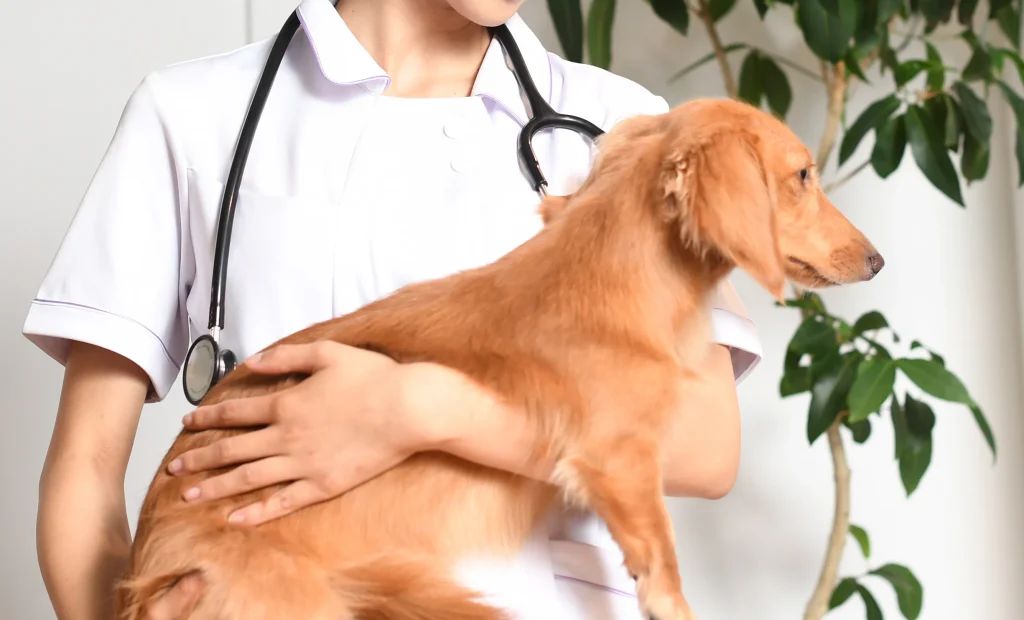
The health of your dog's legs and hips is greatly influenced by daily care.
However, no matter how careful you are, changes due to aging and constitution cannot be completely prevented.
The important thing is to "respond early when you notice something".
Signs in Legs and Hips That Require a Veterinary Visit
- Trembling when standing up or taking a long time to start moving
- Stopping during walks or a noticeably shorter walking distance
- Avoiding stairs or the sofa
- Walking with one leg lifted or dragging the hind legs
- Abnormal sitting posture, or noticeable difference in thickness between left and right legs
- Showing pain when touched, crying out, or becoming aggressive
These symptoms may be early signs of osteoarthritis, intervertebral disc disease, patellar luxation, or neurological disorders. Early consultation often leads to better pain control and prevention of joint deformity.
Overview of Examination, Treatment, and Rehabilitation
- Physical examination and range of motion test: Check joint movement and left-right differences in muscle strength
- X-ray (radiograph) examination: Evaluate joint and bone morphological abnormalities and the presence of arthritis
- Blood tests: Check inflammatory markers and metabolic abnormalities (also differentiating hormonal diseases)
- Ultrasound, CT/MRI examination: Evaluate soft tissues and nerves (as needed)
- Treatment and care policy: A combination of oral medications (pain relievers and anti-inflammatory drugs), joint supplements, rehabilitation, and weight management plans
Especially in chronic joint diseases, multifaceted management (exercise + environment + nutrition) in addition to medication is the key to treatment success.
"Taking a step you can take today" – A message to owners
Summary ― It is never too late to start leg and hip care
What is needed to protect your dog's leg and hip health is not special exercise or expensive supplements.
The accumulation of small efforts by the owner, such as daily walks, reviewing the environment, and weight management, is the best care.
Changes due to aging and illness are inevitable, but with early awareness and proper care, dogs can maintain "the time they can walk on their own four paws" for a long time, even in their senior years.
To help your beloved dog walk on their own and go to their favorite places for even a little longer—why not start taking a step you can take today, together?
Author of this article

Polaris Vet Representative Veterinarian Shion Watanabe
Currently expanding professional support services by veterinarians for veterinary hospitals and pet-related companies nationwide. He also conducts on-site surgical practices, traveling in response to requests from hospitals all over Japan to perform numerous surgeries, particularly for knee joint disorders. He continually pursues medical care and treatment practices rooted in the clinical field that closely align with animals and their owners.
📰 Related Column:
Share this article