
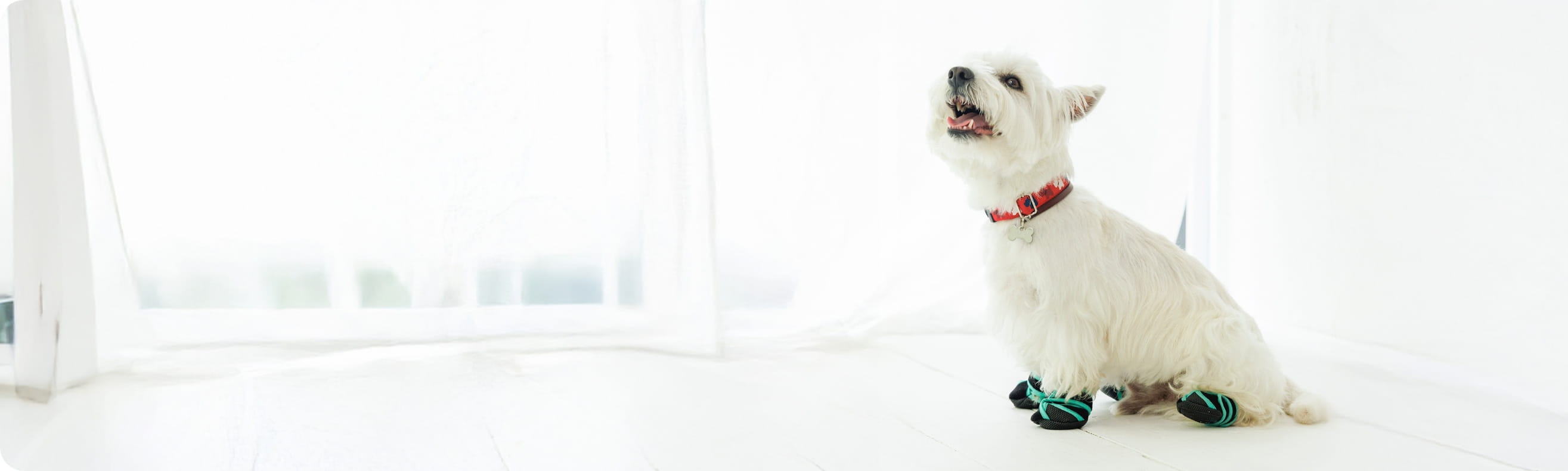
Dog Shoes Are Not Just for Fashion: The Role of Dog Shoes from a Veterinarian's Perspective
 Dog Shoes Are Not Just for Fashion: The Role of Dog Shoes from a Veterinarian's Perspective
Table of Contents
 Table of Contents
Do dogs need shoes? A veterinarian answers that question.

"Is there really any need to make dogs wear shoes?"
Many pet owners have probably felt this way. Indeed, dog shoes are not yet common, and they are sometimes seen as an extension of fashion or style.
However, in reality, dog shoes have gained attention due to practical needs such as protecting paw pads and assisting with walking.
Especially with high asphalt temperatures in summer and frozen surfaces in winter, there are more risks lurking under a dog's feet than we might imagine. Furthermore, for older dogs or dogs with joint concerns, shoes are often used for practical purposes such as slip prevention and fall prevention.
In urban areas, there is also the risk of contact with glass shards and chemicals, making damage during walks an issue that cannot be ignored.
In this column, from these perspectives, we will introduce "the benefits of making dogs wear shoes," "appropriate usage scenes," and "precautions when using them" in an easy-to-understand manner based on clinical experience as a veterinarian. Would you like to think together about the option of making your dog wear shoes?
When walking outside, unexpected risks lurk under a dog's feet
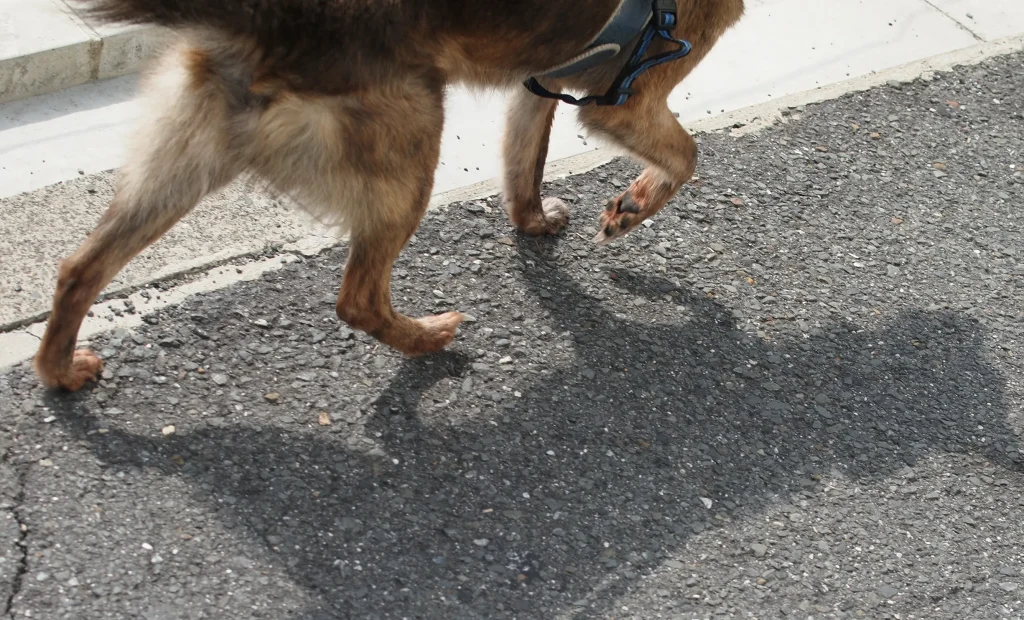
Going for walks is an essential daily routine for dogs, but various risks lurk under their feet more than we realize.
First, in the summer, the surface temperature of asphalt and concrete becomes unexpectedly high, which can cause burns on the paw pads. In fact, even on days when the temperature is around 30°C, the surface temperature of the road can exceed 60°C, and walking for just a few minutes can cause burn-like injuries. Metal parts such as manholes require special attention.
On the other hand, winter brings the opposite risk. There is the danger of chilblains due to falling temperatures, or slipping and falling on frozen roads. Especially for senior dogs or dogs with joint concerns, slipping and falling can often cause injuries and pain. Additionally, depending on the region, snow-melting agents (such as calcium chloride) spread on roads can irritate paw pads, so caution is required.
In addition, in urban areas, the risk of contact with glass shards, sharp stones, and chemicals such as pesticides and herbicides cannot be ignored.
Unexpected dangers lurk even in places we walk daily, such as walking routes, parks, and parking lots.
One way to protect a dog's paw pads from these foot risks is "dog shoes." Of course, they are not always necessary for every dog, but under specific conditions—especially in summer, winter, and long walks on paved roads—they can be an effective option.
Benefits of shoes for senior dogs
For senior dogs, shoes can play a role as an assistive device to support their Quality of Life (QOL).
As dogs age, muscle strength in their hind legs declines, and joint or nerve functions weaken, making many dogs prone to unsteady footing.
For such dogs, shoes serve as a support tool to prevent falls on slippery floors and stabilize their walking. Especially on slippery flooring materials, dogs often cannot grip the floor and fall, and there are many situations where the grip of shoes provides support.
In addition, dogs that drag their paws due to nerve disorders in the hind legs or joint deformations may suffer from abrasions on their toes or damage to their paw pads. Wearing shoes can prevent such troubles in advance and make daily care easier.
Furthermore, wearing shoes can be expected to enhance stability when walking outdoors and protect the paw tips of dogs that tend to become bedridden. For senior dogs, shoes function not merely as accessories, but as "practical tools" to reduce physical strain.
The option of using shoes indoors

When people hear "dog shoes," they may strongly associate them with outdoor walks and outings. However, in reality, there are quite a few situations where dog shoes are useful in indoor environments as well.
Especially on slippery flooring materials such as hardwood or tile, dogs may fail to grip and slip their paws, which can lead to strain on their joints and spine. For senior dogs with weakened hind leg muscle strength or dogs with hip and knee joint concerns, slips and falls pose a risk of recurrent injuries or worsening conditions.
Even in actual clinical settings, I often hear consultations like, "After slipping and falling on the flooring, it started limping." As someone who has been involved in knee joint disorders for many dogs through house-call surgeries, I strongly feel that such slips and falls on indoor flooring are often a contributing factor to orthopedic disorders such as patellar luxation and cranial cruciate ligament rupture.
Although complete prevention is difficult, reducing slips and difficulty in gripping helps alleviate continuous strain on the joints. Indoor shoes can be expected to be fully effective as a "habituated care" for such daily joint protection.
Moreover, for dogs that drag their paws due to neurological or orthopedic disorders, indoor paw abrasions and skin damage may occur even indoors, and shoes can effectively work as a protective measure.
Furthermore, indoor shoes can be useful as part of "hygiene management" for owners who want to keep floors clean or for households living with other pets or small children. Of course, wearing duration and dog reactions vary by individual, and use is premised on being within a range where the dog can spend time comfortably without force.
Utilizing shoes indoors may be an aspect not yet widely known, but please consider adding it to your options as a way to protect your dog's joints and feet and adapt them to their living environment.
Precautions and advice when using shoes
While making dogs wear shoes has various benefits depending on the situation, misusing them can also cause skin trouble and stress.
Therefore, it is important to grasp basic points such as "choosing the proper size," "managing usage time," and "how to get them used to it."
First and most important is size and fit. Shoes that are too big easily slip off, while those that are too small can hinder blood circulation or cause friction rubs and lacerations. It is safer to select them after thoroughly measuring not only the sole of the foot, but also the ankle and instep if possible.
Also, rather than making them wear shoes for a long time all at once, the basic rule is to get them used to it starting with just a few minutes. Since many dogs feel uncomfortable when wearing shoes for the first time, walking awkwardly or trying to take them off, it is important to take steps to "get them accustomed."
Combining it with positive situations, such as putting shoes on during meal or treat times, can sometimes make them more accepting.
Leaving shoes on for extended periods should be avoided. In the case of materials with low breathability, the risk of stuffiness, eczema, and rashes increases, requiring special attention especially during hot seasons. After walks or use, keep the inside of the shoes and the dog's paws clean, and check frequently for any skin abnormalities.
Additionally, even with anti-slip shoes, flooring materials or the dog's walking style can sometimes make them more slippery instead. It is important to carefully observe the actual wearing experience and not force continued use if you feel they are a mismatch.
Furthermore, a trouble occasionally seen is dogs accidentally swallowing discarded shoes or socks.
Particularly in curious young dogs or dogs under stress, shoes may be treated as "toys or chewing targets," so always store them out of the dog's reach after use. In the unlikely event that they are swallowed, please consult a veterinary clinic promptly.
Shoes are not something "natural" for dogs. That is precisely why shoes function as an effective tool only through the consideration and ingenuity of the owner. Putting first that our beloved dogs can spend their time comfortably without strain, let's make good use of the option of shoes.
Conclusion — For the dogs that need them, in an appropriate form
Making dogs wear shoes is not necessary for every dog.
However, against risks lurking under a dog's feet in daily life—such as heat, cold, slippery floors, joint and nerve disorders, and decreased physical function due to aging—"shoes" definitely have a role they can fulfill.
As a veterinarian facing numerous cases myself, I have seen many times how shoes reduced the risk of paw damage and falls, and how dogs wearing shoes became able to walk energetically and happily.
At the same time, consultations such as "the shoes didn't fit" or "struggled with how to put them on" are also not uncommon.
The important thing is not to think "Is it absolutely necessary?" but rather "Could this be useful for this dog?"
And if there is that possibility, to choose correctly and use them in a stress-free way. I feel that leads to a comfortable and safe everyday life for our beloved dogs.
Dog shoes are no longer becoming something "special."
We would be happy if you could remember that such an option exists—one that, depending on your judgment and ingenuity as an owner, can function as a tool to support your beloved dog's quality of life (QOL) right from their paws.
Author of this article

Polaris Vet Representative Veterinarian Shion Watanabe
Currently expanding professional support services by veterinarians for veterinary hospitals and pet-related companies nationwide. He also conducts on-site surgical practices, traveling in response to requests from hospitals all over Japan to perform numerous surgeries, particularly for knee joint disorders. He continually pursues medical care and treatment practices rooted in the clinical field that closely align with animals and their owners.
📰 Related Column:
Share this article