Corporate Column | Living Environment Product Installation Case Studies (Lead Hooks)
 Corporate Column | Living Environment Product Installation Case Studies (Lead Hooks)
In this article, we introduce installation case studies of lead hooks adopted in entrances and waiting areas, based on our track record of implementations in animal vocational schools and veterinary hospitals.
Focusing on workability, proposal points, and the potential for cross-application to other facilities, we explain them keeping in mind the usage environment unique to facility applications.
Overview of Installed Facilities and Background of Adoption
The installation case studies introduced here are for facilities such as animal vocational schools and veterinary hospitals, where many dogs enter and leave on a daily basis. In these facilities,
- Multiple dogs are used at the same time
- An unspecified large number of people, such as pet owners, students, and staff, pass back and forth along the traffic lines
- Temporary tethering occurs frequently
make it necessary to achieve higher safety and operational efficiency than ordinary residences.
Under these circumstances, lead hooks were adopted for the purpose of organizing entrances and waiting areas and preventing accidents.
Evaluation Points from the Perspective of Contractors and Trading Companies
This case study meets conditions that make it easy for contractors and trading companies to propose.
- Wall-mounted installation is basic, requiring no special facility construction
- Can be introduced through partial construction rather than large-scale renovation
- Easy to cross-apply regardless of facility use or scale
In addition, since they can be handled as housing environment parts rather than facility equipment,
they have the feature of being easily incorporated into renovation and remodeling projects, or as value-added proposals.
Easy-to-purchase price range, adoption of multiple hooks
Nagoya ECO Animal & Marine College
Adopted as lead hooks for school dogs at a vocational school that trains professionals such as dog trainers and groomers, and used by many students.
Doggy Hook Light easily locks by turning the main body (resin part) after attaching the leash, preventing the leash from coming off even if a dog jumps up. We integrated the hook part and the main body as much as possible, finishing it with a stylish design that blends into any space.


- Rotary Lead Hook
- Doggy Hook Light
- Size: φ95×D41mm
- Specs: White
- Installable at home
Adopted as a mini-renovation hook
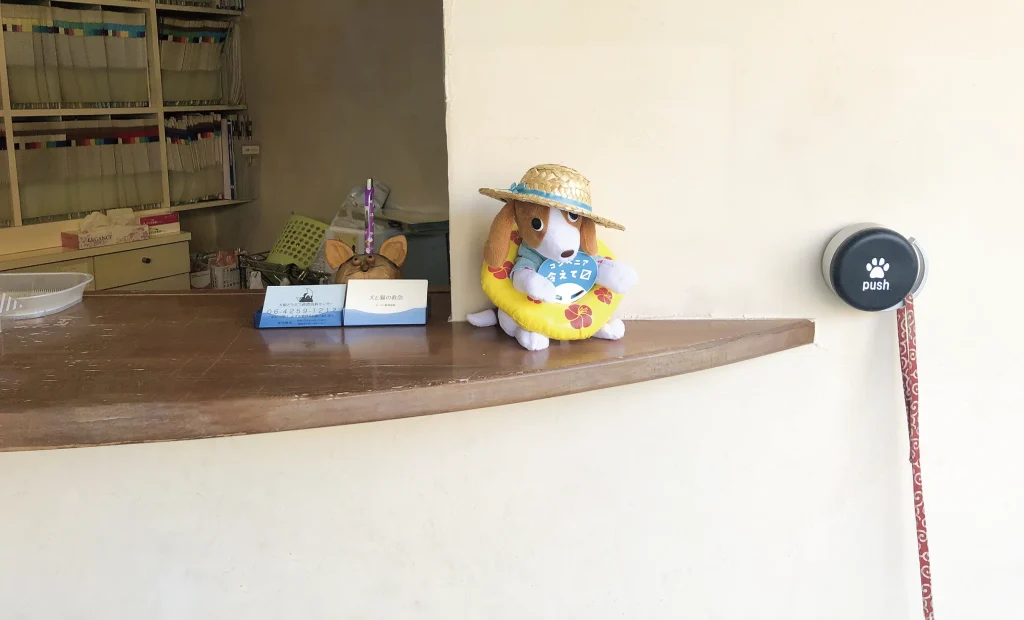
Yasuda Animal Hospital
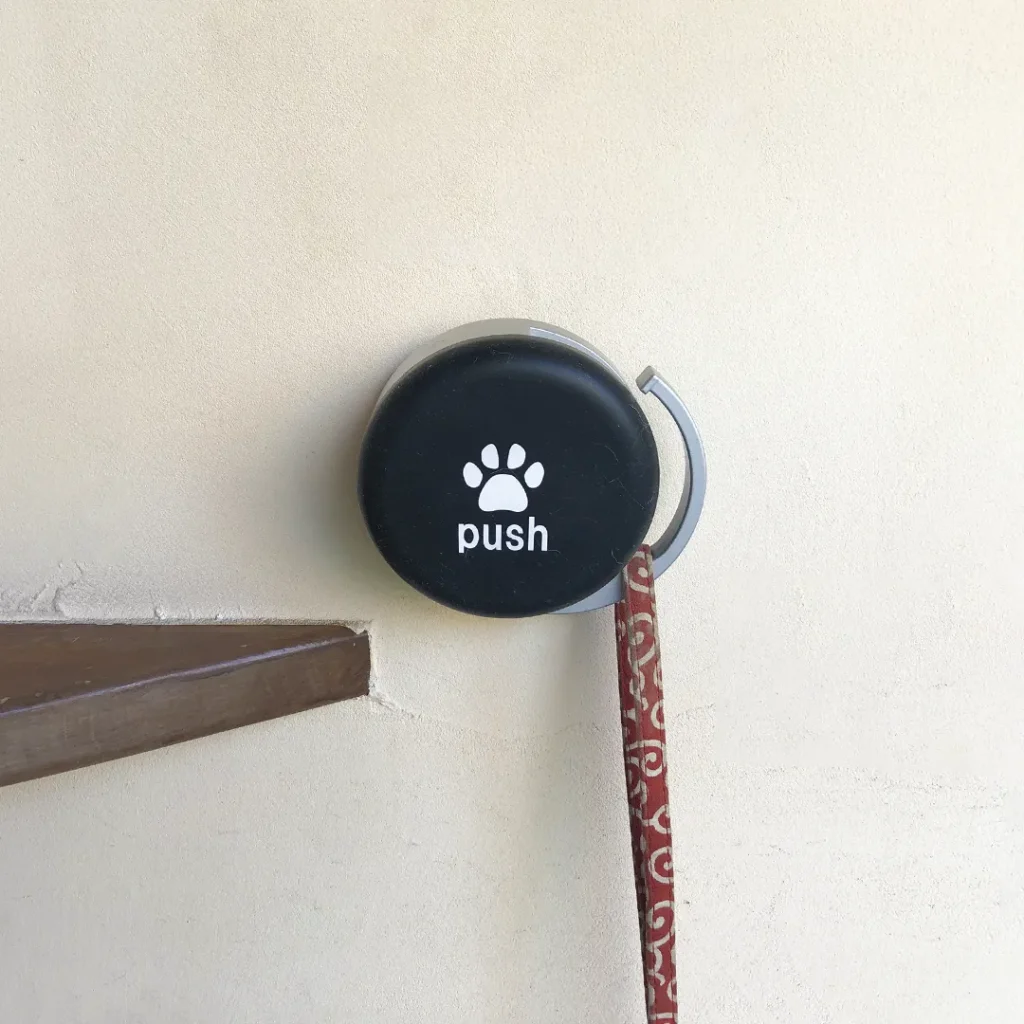
Widely adopted by professional-spec, dog-specialized businesses. When the hook part is exposed, there is a risk of catching on clothes or collisions, but when not in use, it is stored in the main body, and pushing the soft silicone part pops out the hook, allowing families with small children to use it with peace of mind.
At home, it can be used around the entrance and outdoors such as in garages due to its aluminum rust-resistant material.
Dog Lead Hook
Doggy Hook
Size: φ94×D45mm
Specs: Round Black
Installable at home
Potential for Expansion to Other Pet-Related Facilities
This case study is not limited to veterinary hospitals and vocational schools, but can be applied to various facilities such as:
- Trimming salons
- Pet hotels
- Commercial facilities allowing pets
- Pet-friendly housing and apartment complexes
and other various facilities.
Although it is a small part, it can provide the clear value of improved safety and operational efficiency, making it an item that is easy to utilize as a standard specification or optional proposal.
Summary: The Value of Living Environment Parts in Facility Proposals
In proposals for pet-related facilities, not only large-scale equipment, but also
small living environment parts that support daily operations can determine the evaluation of the entire facility.
This installation case study is
- Safety
- Ease of operation
- Reproducibility of proposals
from these perspectives, it is one of the easy-to-handle case studies for contractors and trading companies.
Please use this as a reference case when proposing future pet-friendly facilities and related projects.
Share this article